
In the wake of 2020’s disruptions, the PA SEED STEM Ecosystem faced a critical challenge: how to rebuild engagement across their four-county region while accommodating participants’ varied needs for meeting accessibility. Through thoughtful redesign of their meeting structures and innovative on-site excursions, they’ve created a framework that celebrates partner contributions while ensuring consistent participation. The result has been stronger relationships across educational service agencies, school districts, higher education organizations, non-profits, economic development councils, and businesses—all working together to address STEM teacher recruitment, workforce development, and access to high-quality STEM learning experiences for all participants in southeastern Pennsylvania.
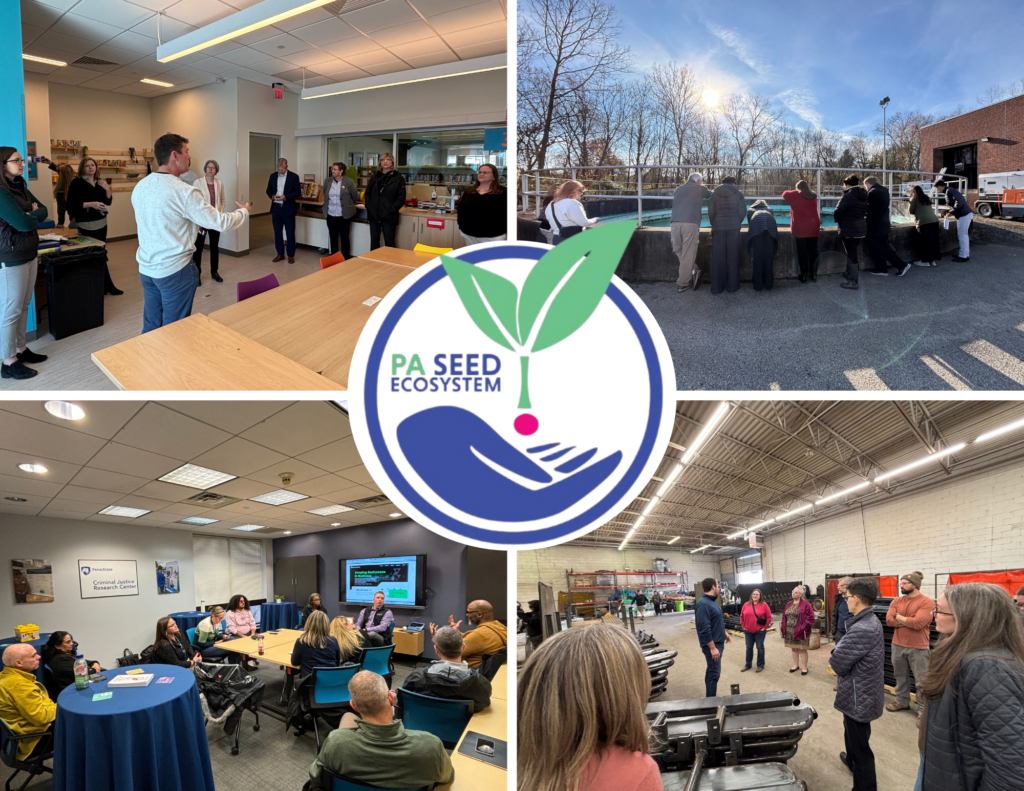
The restructuring of PA SEED meetings encouraged greater participation from the larger STEM ecosystem as the meetings are more equitably distributed among the four primary counties: Bucks, Chester, Delaware, and Montgomery. A variety of meeting locations have allowed to visualize innovative spaces and foster connections among K-12, higher education, and industry partners. Being a co-lead for the STEM convenings workgroup, I have appreciated the opportunity to collaborate with my fellow workgroup members to plan meaningful STEM events that bring members of the STEM community together. I look forward to being part of the National STEM Ecosystem Convening in the fall to continue to refine PA SEED structures and practices to further engage members of the local STEM ecosystem.
Dr. Beth Zigmont, Assistant Director of Teaching, Learning and Equity, West Chester Area School District Tweet
About the STEM Ecosystem
PA SEED serves four suburban counties in Southeastern Pennsylvania. This regional Ecosystem brings together educational service agencies, school districts, higher education institutions, non-profit organizations, economic development councils, and business partners. Their focus centers on addressing several critical challenges: recruiting and retaining STEM teachers, developing a continuous STEM workforce pipeline between K-12 education and industry, and creating partnerships that ensure high-quality STEM learning experiences for all participants. PA SEED partners recognize the complex needs of their area and prioritize local solutions for challenges that affect STEM communities worldwide, creating space for meaningful dialogue about root causes and collaborative problem-solving.
Innovative Practice
PA SEED’s revitalization strategy centered on redesigning their meeting format to increase both accessibility and impact. Recognizing that partners had different preferences and capabilities for face-to-face, virtual, and hybrid meeting formats—and that most lacked dedicated funding for Ecosystem participation—PA SEED leveraged the support of their four educational service agency backbone organizations to develop an innovative approach. These agencies, whose representatives have funded time for Ecosystem work, took the lead in planning and delivering meetings that would showcase partners’ work while accommodating varied participation needs.
The resulting meeting structure strikes a careful balance between consistency and flexibility. By surveying current members and conducting feedback sessions, PA SEED gathered crucial information about participation barriers and opportunities. This collaborative approach allowed them to develop multiple potential solutions, refine them through discussion with Ecosystem members, and implement the most promising strategy during the 2022-2023 school year. What makes their approach particularly effective is the incorporation of on-site excursions that highlight member organizations’ work, allowing partners to build stronger relationships while witnessing STEM initiatives in action.
PA SEED’s implementation plan followed a systematic approach to ensure success:
- Problem identification: recognizing the need for a new Ecosystem structure
- Information gathering: surveying and conducting feedback sessions with current members
- Collaborative solution development: creating and refining multiple options with member input
- Implementation: rolling out the new meeting format
- Continuous improvement: collecting feedback after implementation and making adjustments
Looking Ahead
As PA SEED continues to refine their meeting approach, they are well-positioned to scale their impact across southeastern Pennsylvania. The flexible structure they’ve developed creates pathways for new partners to join while ensuring consistent participation from existing members. By continuing to showcase member organizations through on-site excursions, they strengthen relationships that can lead to innovative STEM initiatives. Their commitment to gathering feedback and making evidence-based adjustments suggests that their model will evolve to meet changing needs, ensuring long-term sustainability. The foundation they’ve built—with educational service agencies providing backbone support—offers financial sustainability that many Ecosystems struggle to achieve.
